
Yes, Unrestricted Giving Can Be Donor-Centric
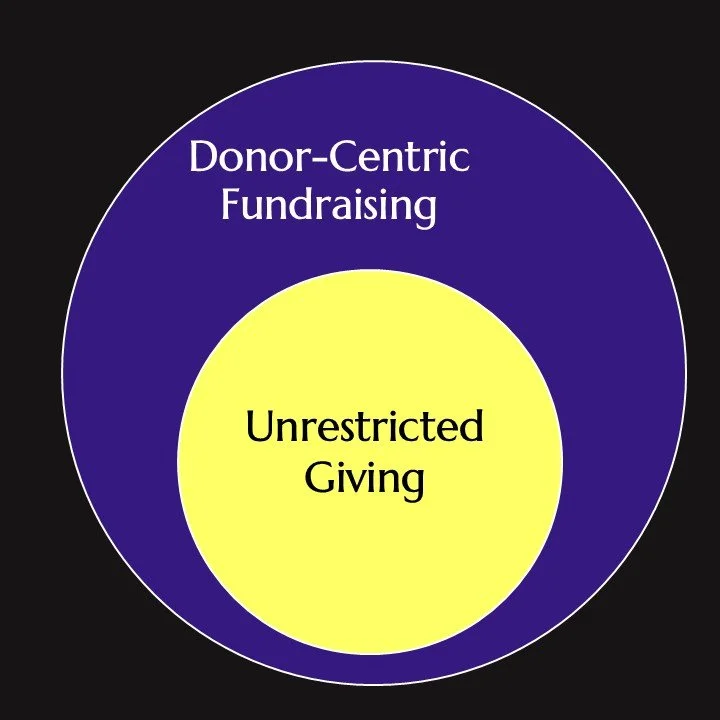
Many organizations avoid asking for unrestricted gifts, whether for $25 or $25 million. This reluctance stems from the principles of “donor-centered” fundraising, which suggest that donor satisfaction relies on three things: receiving prompt and meaningful acknowledgment, restricting their gifts, and receiving reports on the impact they had through their philanthropy.
While acknowledgment and reporting are essential, the insistence on restriction excludes donors who allow the organization to apply their gifts where they will make a positive difference. Fundraisers often fear that without a specific project attached to a gift, they can’t provide a meaningful donor experience. Happily, this is false. It’s possible to provide a satisfying, donor-centric giving experience to those who give with no strings attached.
A Matter of Trust
While the donor gives without restriction, the organization usually has a purpose for the funds. They’ve rigorously planned and prioritized, identified mission-critical programs and services, and built a budget. Donors trust that the organization’s leadership made the right choices.
Many organizations also project unrestricted, immediate-use gift income that they hope and trust donors will provide and begin their spending before any/all of the funds are in hand. I once led an annual fund that was so integral to the university’s budget that the finance department called monthly for updated projections. Unrestricted gifts aren’t vague; they’re vital.
Escaping the “Black Hole”
Unrestricted funds are often criticized as “black holes”—money goes in, but donors don’t see anything come out. I view them differently; giving without restriction is a superpower. These heroic donors save the day by ensuring the organization can apply their gifts to its highest priorities.
To maintain this flexibility for your organization while satisfying donors’ need to understand their impact, try these solicitation and reporting strategies:
Look Forward. Partner with finance to establish a high-level breakdown of where immediate-use unrestricted gifts will be put to work. Show the percentage of dollars allocated to 3-5 specific areas (e.g., lobbying/advocacy, medical research, student scholarships, client housing, etc.). Provide at least one example from each area to illustrate a donor’s potential impact.
Look Back. Tell stories from the previous year. Show how those unrestricted gifts were put to work (e.g., provided meals, treated patients, taught children, engaged visitors, paid faculty and staff). You can tell donors stories about the impact and explain that their gifts may be used in similar ways. Note: you will need to be more thoughtful about the timing of your next ask. You can send timely thank-yous but the examples of impact won’t be available until the following fiscal year.
Look for Budget-Relief. Offer your donors a small selection of “checkboxes” they can use to direct their gifts to budget-relieving priorities. On the accounting side, these allocations are “as good as” wholly unrestricted gifts. The unrestricted funds that would have been directed to those areas can instead be applied wherever needed. And donors have the satisfaction of knowing where their gifts went.
The Downsides of Restriction
Restricting gifts can make the donor experience less satisfying. Organizations must invest significant resources to track and report on the use of multiple funds. The development office gathers information from colleagues busily putting the funds to good use, leaving them little time to respond. Donors may receive more generic and/or delayed impact reports as a result. In addition, donors who make modest restricted gifts (e.g., $50 toward a new building) may not feel like they’ve made a meaningful difference.
Unrestricted fundraising flips the script. It positions giving as a collective activity. Instead of being one donor making a drop-in-a-bucket restricted gift, unrestricted donors join forces to have a much larger impact on the organization and those it serves.
Better Blended Asks
I’m a huge fan of blended asks, combining current-use, capital/endowment, and planned gifts. However, I dislike the common framing: “Support what you’re passionate about and make an annual fund gift.”
This implies that unrestricted annual fund gifts don’t support your passion. But they may fund exactly what a donor loves most at your organization. It’s up to us to make a clear connection whenever possible. I’ve seen tens of thousands of people enjoy excellent, donor-centric giving experiences without restricting their gifts. With effort and teamwork, our institutions can make this possible.
